
Belly Dance Basics: 5 Movements to Build Body Awareness, Coordination and Confidence

Belly Dance Basics: 5 Movements to Build Body Awareness, Coordination and Confidence
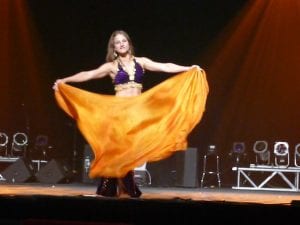
Bellydance, belly dance exercises, basic belly dance movements, torso movements, hip movements, dance services​Belly dance is a playful way to explore movement through the hips, rib cage and torso. It combines rhythm, coordination, mobility and body awareness, and it can be adapted for beginners as well as more experienced dancers.

You do not need dance experience to start. The goal is not to make the movements perfect, but to learn how different parts of the body can move independently and then gradually connect them together.

1. Side-to-Side Slides

Keep your hips or rib cage roughly level and glide gently from one side to the other. Try to avoid leaning the whole body and instead focus on creating the movement through the pelvis or torso.

This is a simple way to practice lateral movement, coordination and control.

2. Forward and Back Slides
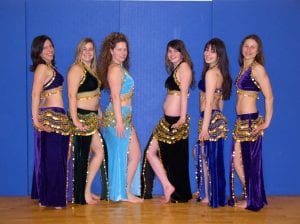
Bellydance, belly dance exercises, basic belly dance movements, torso movements, hip movements, dance servicesKeep the movement small and controlled as you shift the hips or rib cage forward and backward.

You can practice the pelvis and upper body separately at first. Once the movement feels more natural, try linking it with music and breath.

3. Tilts

Tilting involves lifting one side of the pelvis or rib cage while the other side lowers.

For the hips, a small bend and straighten through the knees can help create the movement. Keep it comfortable and avoid forcing a large range.

Tilts are useful for learning isolation and control through the pelvis and torso.

4. Twists

Twists rotate the hips or rib cage around the vertical axis of the body.

A faster hip twist can become a shimmy variation, while quicker shoulder or rib cage rotations can create another style of shimmy.

Start slowly so you can feel where the movement is coming from, then gradually add speed if it stays relaxed and controlled.

5. Tucks and Releases

Pelvic tucks involve gently changing the position of the pelvis rather than forcefully squeezing the abdomen or glutes.

Think of moving between a small anterior and posterior pelvic tilt. The movement should stay comfortable and coordinated with the breath.

You can also explore a similar in-and-out movement through the rib cage.

Practice With Curiosity

It can help to practice in front of a mirror, but try not to use the mirror only to judge how you look. Use it as feedback for coordination and movement quality.

Keep your knees soft, breathe normally and let your shoulders and face stay relaxed. Music can make the movements easier to feel and much more enjoyable.

Belly dance is a skill, so give yourself time. Some isolations may feel strange at first, and that is completely normal.

Why Belly Dance Can Be a Great Movement Practice

Belly dance can challenge coordination, rhythm, balance, mobility and body awareness while also giving you a creative way to move.

It can also be a nice complement to strength training or yoga because it asks the body to move in directions that traditional gym exercises often do not.

If you enjoy expressive movement, you may also like Spine Undulation: A Gentle Way to Explore Spinal Mobility and Body Awareness.

Explore Dance With Choose2be

I have taught dance and movement in different forms over the years, and I continue to incorporate rhythm, body awareness and expressive movement into my teaching.

You can learn more about Dance Classes in Nanaimo or explore Group Fitness Classes in Nanaimo for current movement options.
My Yoga Teacher Training Journey: How Yoga Changed the Way I Move, Teach and Live

My Yoga Teacher Training Journey: How Yoga Changed the Way I Move, Teach and Live

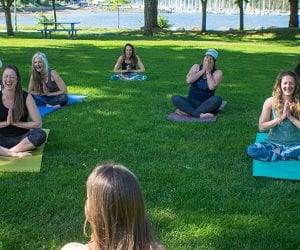
Deeping yoga practice, self growth, committing to yoga teacher training

Yoga has been one of the most influential practices in my life. My decision to complete a yoga teacher training was not only about becoming a teacher. It was also about creating space to learn, reflect, move, breathe and understand myself differently.

That experience became part of the foundation of the work I do today through Choose2be.

Why I Chose Yoga Teacher Training

At the time, I was going through a difficult period in my life and felt disconnected from myself. After several accidents and years of feeling physically and emotionally unsettled, I knew I wanted something to change.

I started looking for a yoga teacher training that went beyond simply learning poses. I found a Chakra Yoga school that offered an intensive three-month, 340-hour training in Thailand, and I decided to follow that path.

It was a big commitment, but it became an important turning point for me.

What the Training Was Like

The program included much more than physical yoga practice. Our days included breathing practices, chanting, movement, dance, yoga postures and lectures on topics such as nutrition, philosophy and the chakra system.

Taking that amount of time away from everyday life gave me space to slow down, learn and reconnect with myself.

Many of the practices I discovered during that training continued to influence the way I approached movement, teaching and personal growth afterward.

Becoming a Teacher

When I came home, I found myself naturally beginning to share what I had learned.

Teaching helped me discover another side of yoga. It was no longer only about my own practice. I began learning how to guide other people, adapt movement, communicate clearly and create an environment where people could explore yoga in their own way.

Over the years, my teaching continued to evolve. I studied and taught yoga alongside strength training, mobility, dance, functional movement and other forms of fitness, and those different disciplines gradually began to influence one another.

Today, I do not see yoga and strength as opposites. I see them as different tools that can help people become stronger, more mobile, more aware and more confident in their bodies.

Yoga Teacher Training Is Not Only for Future Teachers

One of the things I learned is that Yoga Teacher Training can be valuable even if you never plan to teach a public class.

A training can give you time to deepen your own practice, learn more about anatomy and movement, explore breathing and philosophy, develop teaching skills and spend time with a community of people who are interested in similar things.

For some people, teaching becomes the next step. For others, the experience is primarily personal.

Both are valid reasons to participate.

The Next Evolution of Choose2be Yoga Teacher Training

I previously offered Yoga Teacher Training programs through Choose2be, and I am now developing a new 200-hour training for 2027/2028.

This next version will reflect how my own work has evolved. The program is being designed to bring together yoga, functional movement, mobility, anatomy, teaching skills, breathwork, personal development and embodied practice.

My goal is to create enough time for students not only to learn information, but to practice, integrate and develop confidence in their own voice and approach to teaching.

You can learn more about the developing Yoga Teacher Training in Nanaimo.

Yoga Continues to Evolve With Me

 Deeping yoga practice, self growth, committing to yoga teacher training

My relationship with yoga today looks different from when I first travelled to Thailand for teacher training, and I think that is a good thing.

I still value the breath, awareness and reflective side of yoga, but I also bring in what I have learned through strength training, mobility, dance and more than two decades of working in health and fitness.

The practice has continued to change as I have changed.

If you are interested in practicing with me now, explore Yoga & Mobility Classes in Nanaimo.

For a deeper look at breathing and the nervous system, you can also read Breathwork, the Nervous System, and Epigenetic Trauma on Vancouver Island Holistic Counselling.