10 Calisthenics Exercises to Build Strength Without a Gym
Calisthenics uses your own body weight as resistance, making it a practical way to build strength almost anywhere. You can train at home, outdoors or while travelling without needing much equipment.
Bodyweight training can be challenging enough to build strength and muscle, especially when exercises are progressed over time by changing leverage, range of motion, tempo or adding more difficult variations.
1. Push-Ups
Push-ups primarily challenge the chest, shoulders, triceps and core.
Start in a plank position with the hands slightly wider than shoulder width. Lower with control, keeping the body relatively straight from head to heels, then press back up.
If a full push-up is too difficult, elevate the hands on a bench, counter or wall.
2. Dips
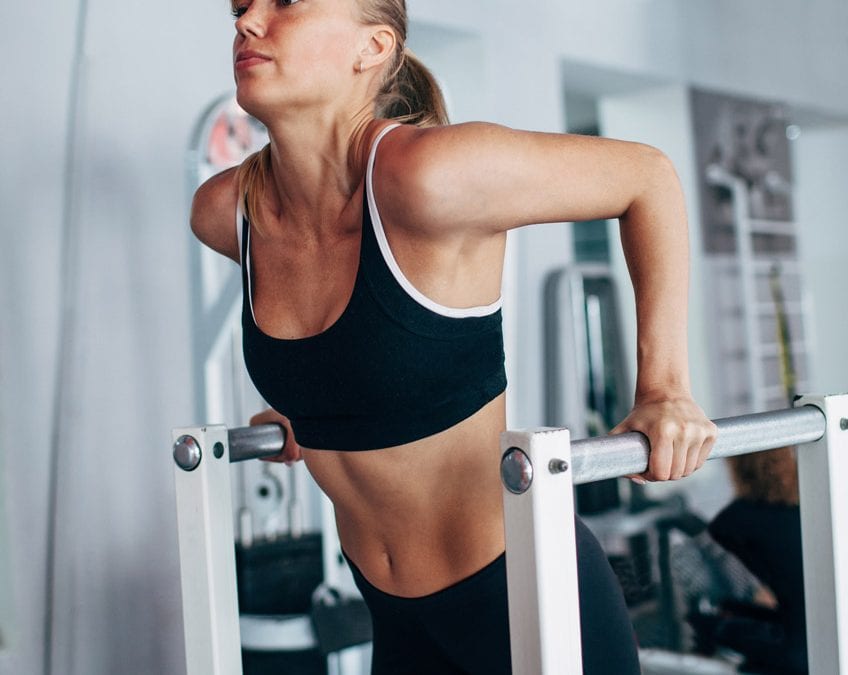
Dips challenge the chest, shoulders and triceps.
Parallel bars are ideal, but many people practice assisted variations first.
I would avoid using an unstable chair, because it can slide or tip. A sturdy bench or dedicated dip station is a safer option.
Keep the shoulders controlled and only lower as far as feels comfortable.
 3. Lunges
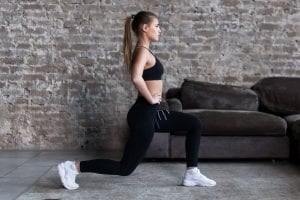 3. Lunges
Lunges train the legs and hips while also challenging balance.
Step into a comfortable stance, bend both knees and lower under control.
You can use:
- reverse lunges
- forward lunges
- walking lunges
- split squats
- lateral lunges
Reverse lunges are often a good place to start if balance is challenging.
4. Planks
Planks train the trunk to resist movement.
Start on the forearms or hands and create a long line through the body.
Instead of simply holding as long as possible, focus on maintaining control.
You can progress with:
- side planks
- shoulder taps
- long-lever planks
- plank walkouts
5. Jumping Jacks
Jumping jacks are more of a conditioning exercise than a major muscle-building exercise, but they are useful for warming up and adding cardiovascular work.
For a lower-impact version, step one foot out at a time instead of jumping.
They work well between strength exercises when you want to raise the heart rate.
6. Squats
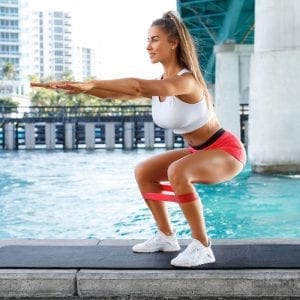 6. Squats
Bodyweight squats train the hips, thighs and trunk.
Stand with the feet in a comfortable position and sit down and back while allowing the knees to bend naturally.
Your knees do not need to stay behind your toes.
Choose a depth you can control.
Progressions include:
- tempo squats
- pause squats
- split squats
- assisted single-leg squats
- pistol squat progressions
You can read Pistol Squat Progressions: How to Build Strength, Mobility and Control for more.
7. Burpees
Burpees combine a squat, plank and usually a jump.
They are great for conditioning, but they are not automatically the best exercise for building muscle.
Try a simple version:
- Squat down.
- Place the hands on the floor.
- Step or jump back to Plank.
- Step or jump forward.
- Stand or add a small jump.
Use a step-back version if jumping does not feel good.
8. Superman or Prone Back Extension
Lie face down and gently lift the chest, arms or legs away from the floor.
This can help train the back extensors and posterior chain.
You do not need to lift very high.
A useful variation is lifting opposite arm and leg rather than everything at once.
9. Pull-Ups
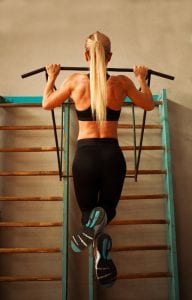 9. Pull-Ups
Pull-ups are one of the most effective bodyweight exercises for the upper back, arms and grip.
Use an overhand grip and pull the body toward the bar.
If you cannot do a full pull-up yet, try:
- assisted pull-ups
- band-assisted pull-ups
- eccentric lowers
- scapular pull-ups
- feet-supported rows
You do not need to get your chin dramatically over the bar. Focus on controlled pulling.
10. Chin-Ups
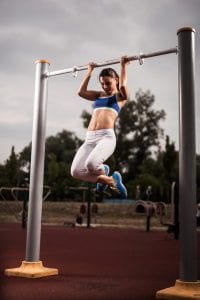
Chin-ups use an underhand grip and usually involve more contribution from the biceps.
They train many of the same muscles as pull-ups but can feel easier for some people.
You can use the same progressions: assistance, slow lowering and partial ranges.
How to Make Calisthenics Harder
Bodyweight exercises need progression just like weight training.
You can increase difficulty by:
- slowing the lowering phase
- adding pauses
- increasing range of motion
- changing leverage
- using single-leg or single-arm variations
- increasing repetitions
- reducing assistance
The goal is not just to do more reps forever. It is to keep creating an appropriate challenge.
Calisthenics vs. Weight Training
You do not have to choose one.
Calisthenics is excellent for body control, strength and training without equipment. Weight training makes it easier to adjust resistance in small increments.
Both can work extremely well.
You can read Bodyweight Training vs. Weight Training: Which Is Better? for a deeper comparison.
Build a Simple Full-Body Circuit
A beginner-friendly circuit could include:
- squats
- incline push-ups
- reverse lunges
- plank
- assisted rows or pull-ups
Perform each exercise with good control, rest as needed, and repeat for 2–4 rounds.
If you want help progressing bodyweight exercises or combining them with strength training, learn more about Personal Training in Nanaimo.
 Caregiving can be deeply meaningful, but it can also be physically and emotionally demanding. When much of your time and energy goes toward supporting someone else, your own needs can easily move to the bottom of the list.