“This is one of the best 200 hour teacher training programs I have seen! Such high caliber of teachers- so diverse, interesting and important material.” Lindsay J. Campa, Yoga Therapist
Learn from Teachers of different styles of Yoga
18 Sequenced Vinyasa Classes detailed program included
Explore the Chakras system in depth
Apprenticeship and mentoring possibilities
“Vero put together this teacher -training course from her heart and soul and it shows, this YTT have made a huge difference in my life. . This course has CHANGED MY LIFE and I couldn’t have done it without the help of this community.” Robin Minty
Turn Your Yoga Passion Into a Career
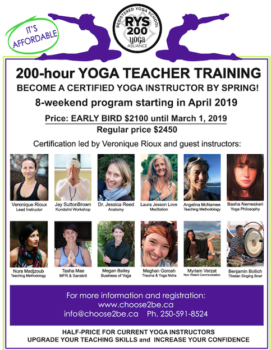
Choose2Be now offer you an amazing opportunity to become a yoga leader in your community! Certification leader and inspirational fitness instructor Veronique Rioux and her team will educate and guide you through the200 hours of Yoga Teacher Training certification and help turn your yoga passion into a career!
Curriculum Breakdown
Technique, training and practice, 100 hours
Anatomy of the body, 10 hours
Anatomy of the Chakra and energy body, 10 hours
Philosophy, 20 hours
Ethics for Yoga teacher, 10 hours
Teaching methodology, 20 hours
Business of Yoga, 5 hours
Practice teaching, 5 hours
Homework, 20 hours
Yoga Teacher Training Certification Description
Choose2be’s 200 hours of Yoga Teacher Training certification is designed to deepen your yoga practice and knowledge. Explore yoga philosophy, anatomy, asana, pranayama, meditation, mantra, and practice teaching in a safe environment with other students. In this program, you will learn to create an asana sequence for students at all levels using props and hands-on assistance. Certification is led by Veronique Rioux, with the participation of guest instructors specialized in specific areas.
Manifest your deepest desires while assisting others in manifesting their desires.
As we sit in a group, we each get a chance to talk about something that we want to manifest in our life. It can be anything!! Examples are: (Physical, emotional or mental healings. Career or occupational advances. Relationship or love miracles. Personal growth or spiritual breakthroughs. Obstacles you are wanting to overcome. Anything at all!) Each person gets a minute or 2 to share their intention. Followed by 3-5 minutes of meditation, where you and the rest of the group visualize your intention. (Be very clear so that we can all paint a bright mental image) Everyone gets an equal turn and time to have space held for them. Setting intention aligns your mind and your heart with your desires. Doing this helps us stay on track with our purpose and keep momentum moving quickly towards our dreams. Doing this in a group intensifies the energy substantially! Miracles happen and dreams come true, fast! I have tonnes of testimonials in my life and from the groups I’ve been in. This stuff works!! I promise!
Jay SuttonBrown: Kundalini Workshop
Friday April 26, 2019, 6:30pm – 8:30pm
Join Jay Suttonbrown for a potent yoga experience. In this Kundalini Yoga and Meditation workshop, we will practice powerful kriyas to cleanse the nervous system, mantras to connect to clarity, and learn why this form of yoga is so special. Kundalini is the Yoga of awareness and action. This is an introduction to the incredible depth of practices available to you through the Kundalini Tradition.
About Jay SuttonBrown:
Jay Suttonbrown, E-RYT 500 has been teach yoga for over a decade. Her passion is cultivating authenticity in our experience by stepping out of habits and into personal empowerment. She shares Kundalini Yoga (the yoga of action), Hatha, Prenatal, Yin and Restorative Practices. She is the Founder of Manipura Yoga School and loves training Yoga Teachers to share their vision with the world. “A human life is made up of choices. Yoga is mindfully connecting to those choices. Connecting to our truth, power, and worthiness. Connecting to our bodies, breath and life force. Connecting to how our habit energy works, and what it feels like when we rise above our habits into our true vibrant state. Yoga is a set of powerful technologies that support our journey to mindful connection, each day, each moment, and each breath. Even “when we don’t feel like it.” We have choices. Sat Nam.”
Basha Nemeskeri: Yoga Philosophy
Philosophy Saturday and Sunday April 27 & 28, 2019, 8:30am – 5:30pm
Like many of us, suffering brought me to yoga. It was the vulnerability and honesty of the teacher that showed me that we are all in this together – that we all go through the heartaches, and the joys, and the boredom. After a few years of practicing, I simply couldn’t NOT teach others, because of how much I’d learned and fallen in love with in the practice. I have done teacher trainings in Anusara, Ashtanga and Ayurvedic Yoga Therapy and have yet to cease wanting to keep learning more about this never ending field. When I teach, I think of what could help my students feel as good as their bodies were designed to feel…to remember how fantastic we’re all meant to feel if we take care and pay attention. I like to remind the fellas I teach that they are quite possibly the most flexible guys in their entire family lineage, and to take that as a big pat on the back I like to encourage and motivate, and show people how remarkable they truly are.
I have a 200 hour through ensure, and a 250 hour through ayurvedic yoga therapy and a 50 hour kundalini. Been teaching for 8 years
Non Violent Communication with Myriam Verzat
Friday May 3, 2019, 5pm – 9pm
Welcome to a two hours workshop based on a Nonviolent Communication (https://www.nonviolentcommunication.com/), a revolutionary approach now worldly renowned, developed by Marshall Rosenberg to:
Connect to yourself at any time to find what is really important to you.
express your true self to others without judgments.
listen deeply to someone else’s truth even when you hear criticism
engage in difficult and challenging conversations with a great dose of empathy.
About Myriam:
Nonviolent Communication (NVC) has been a very important in my life since I was a child. It is a process and a way of relating to each other that my parents have invited in our family since I was very little. I can see how much it has helped and still helps to nurture our relationships in my nuclear family of six people.
After reading and experiencing by my-self for many years, I joined a community and studied Nonviolent Communication for a in Montreal. Meanwhile, I started offering workshops with Erik Pena Salazar from Communication Synergie. I moved recently to Nanaimo and I am starting a training to engage in the certification process (The Center for Nonviolent Communication) with The Farthest Shore on Gabriola Island.
I feel so grateful about having NVC in my life that I want to share it with others. I have the deep conviction that the way we relate to ourselves and to each other is at the core of the type of violence we observe and perpetuate in the world. I think we need to make a deep change in the way we relate to ourselves, to each other and to the planet if we want to survive as a species on this planet. And I definitely want to be part of this change! I am combining my NVC work to nature connection and improvisation approaches. To know more about me, please visit: www.myriamverzat.com.
Angelina McNamee: Find your voice & Restorative Yoga
Saturday May 4, 2019, 8:30am – 12:30pm
Voice is our teaching tool. We need to develop our voice in order to be effective Yoga teachers. In this workshop, guest presenter Angelina McNamee will introduce us to the concept of voice – both the physical voice and authentic voice. We will be guided through breathwork (pranayama) and vocal exercises (mantra) which give use tools to strengthen our practice and grow our confidence as teachers. Angelina will share insights gained from many years of studying and teaching Yoga to help beginning teachers find their voices and develop their own teaching styles. The importance of time management and establishment of priorities and boundaries will be discussed. We will also have fun with role play and take time for some restorative postures.
About Angelina McNamee:
Angelina has several Bachelor degrees and a Master’s in Education. Her yoga journey started 20 year ago when she travelled to South India to complete a teacher training program in Sivananda Yoga, then on to Argentina where she studied at the Indra Devi Foundation. Angelina is also certified in Stott Pilates, and enjoys teaching mat classes in addition to Hatha Yoga. Angelina is familiar with many different styles of Yoga, and has participated in numerous workshops while working closely with highly experienced teachers from around the world. With a strong background in wellness and education, she hopes to inspire others along the Yogic path.
Also have two, 500 hr Yoga Teacher Training; certified in Sivananda Yoga, Vinyasa, Yin, and Restorative Yoga, as well as Pilates Matwork.
Jessica Lowry: intro to Iyengar Yoga
Sunday May 5, 2019, 1-3pm
Jessica Lowry is a certified Iyengar yoga instructor . She teaches privately and group classes in Saltair and in Nanaimo at Bend Over Backwards. Jessica is a classically trained actor and has performed in theatres across Canada. Yoga and theatre’s capacity to unveil our most authentic self is a huge anchor for her in both these practises. Jessica will be introducing an ‘i am’ series of yoga workshops for teen girls for cultivating awareness practises, community and empowerment through yoga and self expression. She is available to lead classes in schools that connect elements of theatrical, sensory exploration with the practise of yoga. alignwithjessica.com
Class description:
Iyengar yoga is a practise founded by B.K.S Iyengar who is known as the father of modern yoga. Iyengar yoga offers a thorough teaching methodology that introduces poses, and specific actions within poses progressively such that a student learn and build their understanding of pose work, alignment, and themselves, safely and systemically. Many associate props with this practise. Props are part of the practise but are used in many creative ways not only to support but to enhance learning. Jessica will be sharing elements of Iyengar yoga to give student teachers a taste of this practise and how it might inform the questions they ask when approaching, ‘What am I teaching and why? ‘What do I see in my students and how can I help them improve?’ She is excited to share her passion for this practise with those interested in the subject of yoga.
Tash Vincze and hypnotherapy
Friday May 10, 2019 6:30pm – 8:30pm
About workshop
This workshop will be focused on dissolving the walls you put for yourself, so that you can be vulnerable in a safe place to bring love to yourself.
About Tash:
Tash Vincze is a Yoga teacher and Certified Hypnotherapist. She began her spiritual path by learning how to meditate, from there her practice expanded into yoga and hypnotherapy. Tash is dedicated to helping people achieve their goals whether they’re physical, emotional, mental or spiritual. Students enjoy her calm demeanor and hands on approach to her classes. Tash loves that Moksha is based on 7 pillars and believes in all of them wholeheartedly, making a practice of them everyday. Tash has a variety of trainings to bring to the studio, these trainings include:
Hypnotherapy training through Island Hypnosis 2007
Moksha level 1 Las Vegas 2009
Moksha level 2 Costa Rica 2014
Yin with Bernie Clark Whistler 2011
Yin with Joe Barnett Costa Rica 2014
Mindfulness (meditation) Training With Frank Boccio 2012
Laura Jesson Love: Meditation
Saturday May 11, 2019, 8:30am – 5:30pm
About Laura Jesson:
A natural born yogi, from philosophy to physical activity, Laura is always striving for balance in her life and empowering the same in others. After five years of personal practice, she took her first training in Moksha Yoga, followed by PreNatal with Janice Clarfield, and Yin with Bernie Clark. One strong source of inspiration woven throughout has been the influence of Michael Stone, a psychotherapist, Yoga and Buddhist teacher, author and activist.
Laura is currently finding more peace through stillness in Meditation, Relaxation and Restorative Yoga. When not on her mat Laura takes all she learns being mom to two beautiful boys and creates more love in life.
E-RYT 500+, moksha 500 hours, prenatal and yin. trauma sensitive training, mindfulness mediation training. BA in Psychology. Post Graduate diploma in Wellness and Lifestyle Management.
Tibetan bowl signing meditation with Benjamin Bollich
Friday May 17, 2019, 7:30pm – 8:30pm
While living abroad for 15 years I was introduced to a powerful, mystical and healing instrument, the Tibetan Singing Bowl.On Meditation: When two frequencies join together another is created through a process called entrainment. As the Tibetan Singing Bowl’s special harmonic frequencies penetrate your bodies sensory systems, entrainment can facilitate deeper states of meditation via alpha and theta waveforms.
On Healing: The harmonics of Tibetan Singing Bowls stimulate the brain’s corpus collosum, which is the bridge between the right and left hemispheres. As the two sides become more synchronized, the release of stress, worry, anxiety, fear and other feelings that have a negative impact on our health enables us to experience more balance, clarity, and productivity. Tibetan Singing Bowls also create strong vibrations that facilitate sensory integration processes. This can be especially helpful for individuals with hyper and hyposensitive disorders.Sound vibration affects each individual differently on a physical, emotional and spiritual level. It is clear that Tibetan Singing Bowls facilitate relaxation, which improves meditation practice and your sense of well-being.
Meg is a certified and registered Yoga Instructor, a certified TRE® Provider, and holds a diploma in Social Services. Meg’s approach to yoga is trauma informed, and based in cultivating friendliness with one’s body through mindful attention and intention to breath, sensation, and movement. She also focuses a great deal on nervous system health and stress physiology, and how we can use the power of neuroplasticity to transform patterns that no longer serve our highest self.
Meg began her lifelong love affair with yoga fifteen years ago. The evolutionary and compassionate nature of yoga drew her in and she’s never looked back. She believes in the transformative and illuminative qualities of yoga, and offers them with the intention of creating deep connection to one’s self.
Through her work as a mental health and addictions outreach worker, Meg discovered the practice of TRE®, or tension and trauma releasing exercises, and trained under Jessica Schaeffer in Portland, Oregon. TRE® has been an invaluable addition to her toolbox of health and wellness empowerment, and she is passionate about sharing it and empowering others in their well being.
Meg’s overall work focuses on getting to know and befriending the body through a compassionate and strengths based approach. She strongly believes that the healthier one’s connection is to one’s body, the more one can enliven inner resources thereby facilitating growth and transformation.
Meg has over 1000 hours of training in styles from Vinyasa to Yin, and as a lifelong learner, attends professional development workshops and trainings whenever she can, and very often has her face buried in a book! When not immersed in pro-d, you will find Meg in the yoga studio, hiking, or sitting quietly and enjoying what this beautiful island has to offer.
Dr. Jessica Reed: Anatomy
Sunday May 26, 2019, 1pm – 5:30pm
About this Anatomy workshop:
Student will learn about the topics of bony and muscular anatomy and how they pertain to yoga asana. This curriculum also addresses injury prevention from the perspective of anatomical variety according to the teachings of Paul Grilley.
About Jessica Reed:
Jessica Reed, has been a Doctor of Chiropractic since 2004. Owner of Reed Family Chiropractor, she has made her home and practiced chiropractic in Nanaimo for over 11 years. She earned her 200-hour Yoga Teacher Training and Prenatal Yoga certificates in 2014 after many years of personal yoga practice. She loves that the pursuit of knowledge within the world of yoga is unlimited, just as in the field of chiropractic. To that end, she has envisioned a space that will serve to enrich the lives of its visitors, whether through yoga or through its many health-and-wellness-related workshops.
Nura Madjzoub: Teaching Methodology
Art of Sequencing Friday May 24, 2019, 5pm – 9pm
Art of Assisting Saturday May 25, 2019, 8:30am – 5:30pm
Nura has been teaching yoga for over a 15 years on multiple continents. She is an avid traveler, a yogi, a mother and therapeutic massage therapist. Like many others, she is also on a quest to connect to the core; to her truth. She believes that how we practice yoga, and what we come up against on the mat is our very own practice ground for real life. Yoga keeps her humble, and hungry for more knowledge. She teaches because she loves to share her own discoveries on her journey through this wonderful and messy life.
Nura has trained and mentored with Sanjeev Bhanot, Founder of Yogalife Foundation, and has completed the 200 hour yoga training at Kripalu Center in Massachusetts. She is trained, certified and experienced in prenatal yoga and has done further studies in Core Strength Vinyasa, Anusara and Thai yoga massage. She is also a Licensed and Board Certified Massage Therapist in New York and in the USA with over 1000 hours of training. Nura brings a unique set of skills to her yoga teaching from her background as a therapeutic massage therapist. She enjoys the interplay between yoga and massage work and draws from all her studies in her classes, workshops and trainings. Her yoga teaching is always infused with a strong foundation in anatomy and physiology. She has been trained, over the past decade and a half, to see the movement and the freedom, as well as the tension and the blocks, in bodies.
Business of Yoga with Megan Bailey
Sunday May 26, 2019, 8:30am – 12:30pm
In this lesson we will explore considerations for the business of being a yoga teacher. Clarify your values and goals then set your business strategy in alignment. Some topics will include business licensing, insurance (e.g. liability, income replacement, disability, worker’s compensation), employee vs. self-employed contractor considerations (tip: always consult your accountant), home-based and commercial space considerations, plus much more. Bring your questions. About Megan Megan Bailey began practicing yoga after tweaking her back at work. Tagging along with friends to a class changed her life and career. The profound physical benefits and application to life outside the mat are why practice is a joy. Megan began teaching yoga in 2005 and opened her studio, Nanaimo Yoga Sanctuary, in 2006. In addition to her RYT200, she holds a Bachelor’s degree in Management, has a Post-degree Diploma in Business, and is completing her MBA part-time while working. Megan is a Chartered Professional in Human Resources.
Myofascial release, postural alignment and Sanskrit with Tasha Mae
Friday May 31, 5-9pm
In this workshop, we will discover the many benefits and uses of bringing a dowel into your practice. The dowel can be used as a tool to assist with postural alignment and myofascial release. We will use the dowel to explore the ancient technique of tapping, as a tool to assist with lengthening and creating space in the body, and even as a way to assist in teaching your students, and yourself, proper alignment when moving through the asanas.
About Tasha
Movement is Tasha Mae’s passion and she considers herself a lifelong student. She is always curious and interested in discovering the most wholesome way to keep our body healthy and well balanced by practicing meditation (just sitting), pranayama and breath, strength training, cardio, and the yoga asanas. Tasha Mae is not only passionate about movement, but also loves to share it with other people. She has currently been teaching yoga and fitness for 3 years. Tasha Mae is an 800hour internationally certified Vijnana Yoga Teacher as well as a Personal Trainer and Fitness Class Instructor. She has also studied and practiced the Tensegrity Repair Series with Gioia Irwin and Flo Dedame.
Vinyasa flow, Awaken our love warrior spirit and Assisting workshop: Chitose Richards
Friday June 7, 2019, 6 pm – 9 pm
About this session:
Students will learn how to assist people during a lesson.
Assisting is a kind of massage that enables your pose to go deeper. You will also know how to use your body to improve your yoga. Send LOVE to assist!
About Chitose:
Chito has been practicing Yoga since 2008. Before moving to Canada, she taught Yoga in Japan for 7 years. Chito is a certified Vinyasa and Hatha Yoga instructor registered with Yoga Alliance. She has learned different styles of Yoga from various teachers around the world. She likes learning as much as she enjoys teaching, subscribing to the mindset that to teach is to learn. Chito believes our minds are materialized and all people in the world can attain happiness. Through Yoga, she has developed an appreciation for life such as family, friends, food we can eat, a roof over our heads, and a bed to sleep in. Chito believes love and appreciation are the most precious of all things. Keep going to be happy and have something to look forward to every day. Focus on being positive to attain a good cycle of energy. This will result in a more fulfilling life. Thank you for visiting my site. Please let me know if you need any assistance by emailing me
Nanaimo has a wide range of yoga options, from heated studios and Vinyasa flow to Iyengar, Yin, Kundalini, restorative classes and smaller community-based practices. The best place to practice depends less on finding the “best” studio and more on finding a teacher, style and environment that suit you.
This guide has been updated to focus on current Nanaimo yoga options as of September 2026 rather than keeping a long directory of teachers and studios that may no longer be operating. Class schedules and instructors change, so always check directly with the studio before attending.
Current Yoga Studios and Classes in Nanaimo
Modo Yoga Nanaimo – Dufferin
4.9•Yoga studio•Open
••
Modo Yoga Nanaimo offers heated yoga and a variety of class styles, including Modo, Flow, Hatha, Slow Flow, Yin, Pilates, prenatal and parent-and-baby classes. Its main studio is on Dufferin Crescent.
This may be a good option if you enjoy a heated studio environment and want a large weekly schedule with several different formats.
Kind Society Yoga
5.0•Yoga studio•Closed
••
Kind Society is a non-profit yoga collective located downtown at 104 Front Street. Its current offerings range from Yin and restorative practices to Vinyasa, Yoga Nidra and classes designed for aging well. The organization describes its approach as accessible, inclusive and trauma-informed.
This could appeal to people looking for a smaller community atmosphere and a variety of slower and more active practices.
Oxygen Yoga and Fitness Nanaimo
4.8•Yoga studio•Open
••
Oxygen Yoga & Fitness on Metral Drive combines FAR-infrared heated yoga with Pilates, strength, sculpt, barre and other fitness-oriented classes.
This is more of a yoga-and-fitness hybrid environment, so it may suit someone who enjoys heat, music and stronger fitness-based classes.
Zen Revolution Yoga+ Spin+ Barre
5.0•Yoga studio
••
Zen Revolution in downtown Nanaimo offers yoga alongside spin, barre, Pilates and strength-oriented classes. Its current yoga offerings include Flow, Yin, gentle yoga and restorative practices.
This can be a good option if you want yoga as part of a broader group-fitness routine rather than practicing exclusively at a yoga studio.
Bend Over Backwards Yoga
5.0•Yoga studio•Closed
••
Bend Over Backwards specializes in Iyengar Yoga, which emphasizes detailed instruction, alignment, progressive learning and the use of props. Current classes are offered at Dharti Mata Centre on Brothers Road.
This style may appeal to people who prefer slower, highly instructional classes and want time to understand how poses work rather than moving quickly through a flow.
One Tribe Studio
5.0•Yoga studio•Open
••
One Tribe Yoga offers a smaller studio environment with a range of yoga practices, private yoga and workshops. It is also currently offering a 200-hour Yoga Teacher Training in fall 2026.
This may appeal to students who enjoy a quieter, community-oriented setting and want to explore yoga philosophy alongside physical practice.
The Solace Centre
4.9•Massage therapist•Closed
••
Solace Yoga currently focuses primarily on Kundalini Yoga, incorporating breath, movement and meditation.
If you are interested in a practice with a stronger meditative, breathwork or spiritual component, this is one of the more specialized options in Nanaimo.
Yoga Through the City of Nanaimo
The City of Nanaimo also periodically offers yoga through Parks, Recreation and Culture. Its 2026 programming has included Gentle Yoga and Yoga, Meditation & Pranayama, making municipal recreation worth checking if you prefer session-based community classes rather than a studio membership.
Yoga and Mobility With Choose2be
I also teach yoga and mobility as part of my current movement and group-fitness work in Nanaimo. My approach has evolved over the years to combine yoga with strength, mobility, functional movement and body awareness.
Rather than focusing on achieving perfect poses, I encourage people to explore what helps them become stronger, more mobile and more comfortable in their own bodies.
You can learn more about Yoga & Mobility Classes in Nanaimo or see my current Group Fitness Classes in Nanaimo. Choose2be currently offers yoga and mobility within its broader Nanaimo fitness programming, and a new Yoga Teacher Training is being developed for 2027/2028.
How to Choose a Yoga Class
You do not need to know exactly what style of yoga you want before trying a class.
Think about the experience you are looking for. Do you want something active and athletic, slow and restorative, heated or unheated, strongly rooted in traditional yoga, or blended with fitness and mobility?
It can also help to ask whether the teacher offers modifications, whether beginners are welcome, how large the classes are and whether the teaching style feels comfortable for you.
Hot Yoga vs. Unheated Yoga
Some Nanaimo studios specialize in heated practice, while others teach at normal room temperature.
Heat is a preference, not a requirement for receiving benefits from yoga.
If you enjoy sweating and tolerate heat well, hot yoga may feel great. If heat makes you dizzy, uncomfortable or depleted, an unheated class may be a much better fit.
You Do Not Need to Be Flexible to Start Yoga
Flexibility is not a prerequisite.
Yoga can include strength, mobility, balance, breathing and body awareness, and each person will look different in the poses.
A good teacher should help you find options that work for your body rather than expecting every student to create exactly the same shape.
The studio name matters less than the experience you have with the person teaching the class.
Try different teachers.
Notice whether you feel comfortable asking questions, whether options are provided and whether the teacher encourages you to listen to your body rather than push through pain.
You may find that one teacher or class style suits you beautifully even when another does not.
Nanaimo Has Plenty of Ways to Practice
The yoga community in Nanaimo continues to change, and that is exactly why I prefer keeping this guide shorter and current rather than maintaining a huge list of every instructor who has ever taught in the area.
Whether you enjoy hot yoga, Vinyasa, Iyengar, Yin, Kundalini, restorative yoga or a yoga-and-mobility approach, there are several different ways to practice locally.
Explore a few, find the environment that feels right for you and allow your yoga practice to evolve over time.
Calisthenics uses your own body weight as resistance, making it a practical way to build strength almost anywhere. You can train at home, outdoors or while travelling without needing much equipment.
Bodyweight training can be challenging enough to build strength and muscle, especially when exercises are progressed over time by changing leverage, range of motion, tempo or adding more difficult variations.
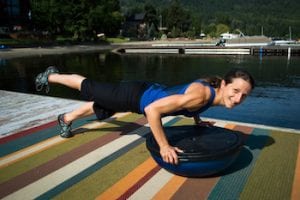
1. Push-Ups
Push-ups primarily challenge the chest, shoulders, triceps and core.
Start in a plank position with the hands slightly wider than shoulder width. Lower with control, keeping the body relatively straight from head to heels, then press back up.
If a full push-up is too difficult, elevate the hands on a bench, counter or wall.
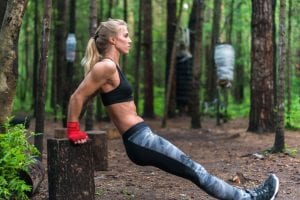
2. Dips
Dips challenge the chest, shoulders and triceps.
Parallel bars are ideal, but many people practice assisted variations first.
I would avoid using an unstable chair, because it can slide or tip. A sturdy bench or dedicated dip station is a safer option.
Keep the shoulders controlled and only lower as far as feels comfortable.
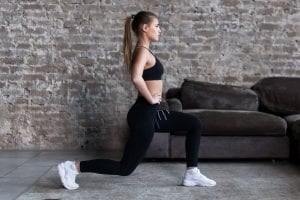
3. Lunges
Lunges train the legs and hips while also challenging balance.
Step into a comfortable stance, bend both knees and lower under control.
You can use:
reverse lunges
forward lunges
walking lunges
split squats
lateral lunges
Reverse lunges are often a good place to start if balance is challenging.
4. Planks
Planks train the trunk to resist movement.
Start on the forearms or hands and create a long line through the body.
Instead of simply holding as long as possible, focus on maintaining control.
You can progress with:
side planks
shoulder taps
long-lever planks
plank walkouts
5. Jumping Jacks
Jumping jacks are more of a conditioning exercise than a major muscle-building exercise, but they are useful for warming up and adding cardiovascular work.
For a lower-impact version, step one foot out at a time instead of jumping.
They work well between strength exercises when you want to raise the heart rate.
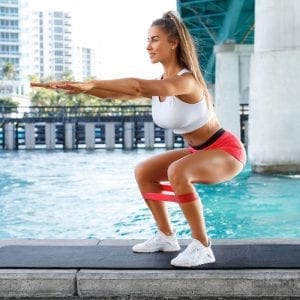
6. Squats
Bodyweight squats train the hips, thighs and trunk.
Stand with the feet in a comfortable position and sit down and back while allowing the knees to bend naturally.
Burpees combine a squat, plank and usually a jump.
They are great for conditioning, but they are not automatically the best exercise for building muscle.
Try a simple version:
Squat down.
Place the hands on the floor.
Step or jump back to Plank.
Step or jump forward.
Stand or add a small jump.
Use a step-back version if jumping does not feel good.
8. Superman or Prone Back Extension
Lie face down and gently lift the chest, arms or legs away from the floor.
This can help train the back extensors and posterior chain.
You do not need to lift very high.
A useful variation is lifting opposite arm and leg rather than everything at once.
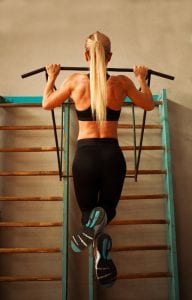
9. Pull-Ups
Pull-ups are one of the most effective bodyweight exercises for the upper back, arms and grip.
Use an overhand grip and pull the body toward the bar.
If you cannot do a full pull-up yet, try:
assisted pull-ups
band-assisted pull-ups
eccentric lowers
scapular pull-ups
feet-supported rows
You do not need to get your chin dramatically over the bar. Focus on controlled pulling.
10. Chin-Ups
Chin-ups use an underhand grip and usually involve more contribution from the biceps.
They train many of the same muscles as pull-ups but can feel easier for some people.
You can use the same progressions: assistance, slow lowering and partial ranges.
How to Make Calisthenics Harder
Bodyweight exercises need progression just like weight training.
You can increase difficulty by:
slowing the lowering phase
adding pauses
increasing range of motion
changing leverage
using single-leg or single-arm variations
increasing repetitions
reducing assistance
The goal is not just to do more reps forever. It is to keep creating an appropriate challenge.
Calisthenics vs. Weight Training
You do not have to choose one.
Calisthenics is excellent for body control, strength and training without equipment. Weight training makes it easier to adjust resistance in small increments.
Caregiving can be deeply meaningful, but it can also be physically and emotionally demanding. When much of your time and energy goes toward supporting someone else, your own needs can easily move to the bottom of the list.
Self-care does not need to mean elaborate routines or hours of free time. Small, realistic practices can help create moments of rest, movement and connection with yourself.
Why Caregivers Need Support Too
Caregivers may experience fatigue, stress, disrupted sleep, physical tension and emotional overload.
Taking care of yourself does not mean caring less about the person you support. It means recognizing that your own well-being matters too.
Sometimes that looks like exercise or meditation. Other times it means asking for help, taking a break, talking with someone you trust or getting professional support.
Meditation for Caregivers
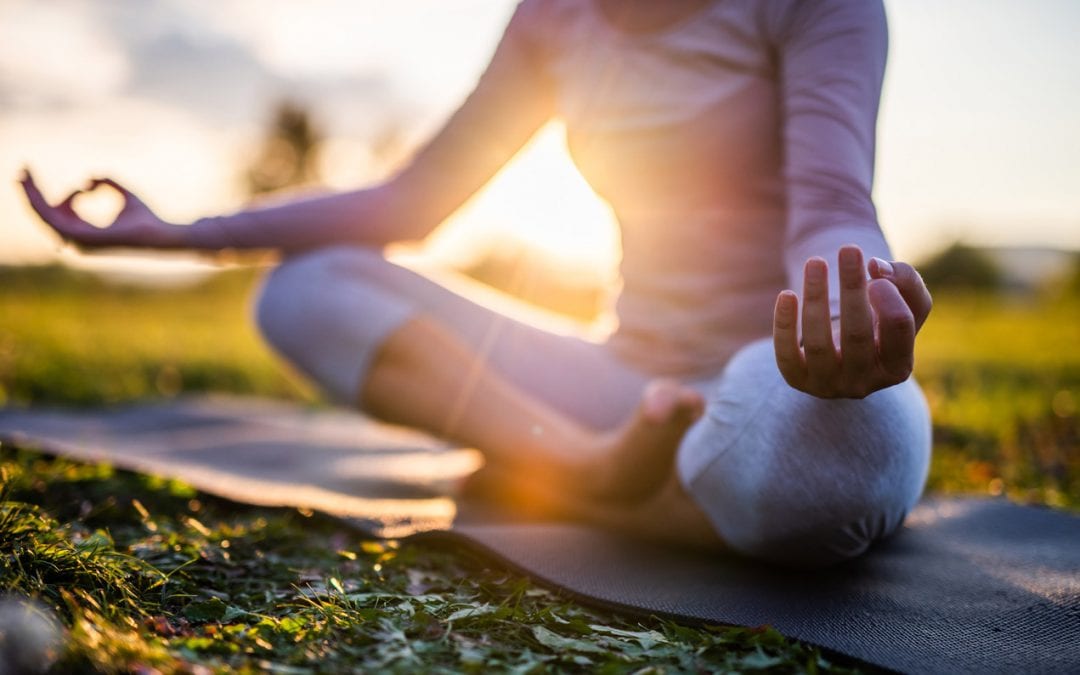
Meditation can be a simple way to pause.
You do not need to stop your thoughts or become perfectly calm. The practice can simply involve noticing your breath, body sensations or surroundings for a few minutes.
Try sitting comfortably and paying attention to one inhale and one exhale at a time.
When the mind wanders, notice it and gently return.
Even a short practice can create a useful transition between responsibilities.
Start With Five Minutes
If you are new to meditation, keep it simple.
Try:
five slow breaths
a short guided meditation
sitting quietly with a cup of tea
listening to sounds around you
noticing where you are holding tension
taking a short phone-free walk
The goal is not to perform self-care perfectly. It is to create a little space.
Yoga as Movement and Recovery
Yoga can offer a combination of mobility, strength, balance and slower movement.
For caregivers who spend time lifting, driving, sitting or helping another person physically, gentle movement may feel especially useful.
A simple practice might include:
Cat-Cow
shoulder circles
gentle side bends
Low Lunge
supported Forward Fold
Chair Pose
gentle twists
Legs Up the Wall
Savasana
Choose movements that feel appropriate for your own body.
Gentle and Chair Yoga
Yoga can also be adapted for older adults or people with limited mobility.
Chair yoga, supported standing poses and simple breathing practices can make movement more accessible.
The important thing is not the complexity of the pose. It is having options that feel safe and manageable.
Self-Care Does Not Need to Be a Spa Day
A bath, tea or relaxing music can be enjoyable, but self-care can also be very practical.
It might mean:
going to bed earlier
eating a proper meal
asking someone else to take over for an hour
going for a walk
saying no to another responsibility
attending a yoga class
talking with a counsellor
sitting quietly before everyone else wakes up
Sometimes the most useful form of self-care is simply reducing the load.
Movement Can Help, But It Is Not the Whole Answer
Yoga and meditation can support well-being, but they are not cures for caregiver burnout, depression, chronic stress or medical problems.
If caregiving is becoming overwhelming, it may be important to look at practical support too: respite care, family help, community resources, medical support or counselling.
You do not have to solve everything through better breathing or a stronger yoga practice.
Create a Small Caregiver Routine
Choose something small enough that you can actually do it.
For example:
Morning: three minutes of breathing or stretching. During the day: a short walk outside. Evening: ten minutes of gentle yoga or quiet time.
A small routine done regularly may be more realistic than waiting for a free hour that rarely arrives.
Mindfulness During Everyday Tasks
You can also practice mindfulness without adding another activity to the day.
While making tea, notice the smell and warmth.
While walking, feel your feet on the ground.
While helping someone else, notice your own breath and shoulders.
These small moments can help bring attention back to what is happening right now.
Some seasons will allow more time for yourself than others.
The goal is not to eliminate stress. It is to notice your own needs before you become completely depleted and to find small, realistic ways to support yourself along the way.
Aerobic and anaerobic exercise are two different ways the body produces energy during movement. Both matter, and most workouts actually use a combination of the two rather than switching cleanly from one system to the other.
Understanding the difference can help you build a more balanced fitness routine.
What Is Aerobic Exercise?
Aerobic exercise relies heavily on oxygen-dependent energy production and is usually associated with longer-duration, lower-to-moderate intensity activity.
Examples include:
brisk walking
steady cycling
swimming
hiking
easy jogging
longer cardio sessions
During aerobic exercise, your heart and breathing rates increase, but the effort is usually sustainable for several minutes or longer.
What Is Anaerobic Exercise?
Anaerobic exercise involves higher-intensity efforts where the body needs energy faster than the aerobic system can supply it.
Examples include:
sprinting
heavy strength training
jumping
short hill climbs
kettlebell intervals
high-intensity circuits
These efforts are usually shorter because fatigue builds more quickly.
The Two Systems Work Together
It is more accurate to think of aerobic and anaerobic metabolism as overlapping systems rather than two completely separate modes.
Even during a sprint, the aerobic system contributes some energy. During a longer run or bike ride, anaerobic pathways still contribute during hills, accelerations and harder efforts.
The difference is mostly about which system is doing more of the work at a given intensity.
Benefits of Aerobic Training
Aerobic exercise can help improve:
cardiovascular endurance
stamina
work capacity
blood-pressure regulation
recovery between harder efforts
overall health and fitness
It can also be a useful way to build a base for hiking, sports and everyday activity.
Benefits of Anaerobic Training
Higher-intensity and strength-based exercise can help improve:
muscular strength
power
speed
bone-loading stimulus
ability to perform short, demanding efforts
overall athletic capacity
Strength training is especially important for maintaining muscle as we age.
You do not need to train every system hard every day.
Interval Training Uses Both Systems
Interval training alternates harder efforts with recovery periods.
For example:
30 seconds hard, 60 seconds easy
1 minute fast, 2 minutes easy
short hill efforts followed by walking recovery
Because the harder intervals rely more heavily on anaerobic energy while the recovery periods depend more on aerobic metabolism, interval training can challenge both systems.
One common mistake is putting all “hard” exercise into the same category.
Heavy strength training and HIIT are not interchangeable.
Strength training often requires longer rest periods so you can maintain technique and produce force. HIIT is usually more about conditioning and repeated high-effort bouts.
Both can be useful, but they train different qualities.
How Hard Should You Train?
Intensity should match your goals and current fitness level.
You do not need to push every session to exhaustion.
A good program usually includes easier days, harder days and enough recovery between demanding workouts.
If every session leaves you depleted, sore or unable to perform well the next time, you may be doing too much.
A Simple Weekly Balance
A practical week might include:
2–3 strength sessions
2–4 lower-intensity cardio sessions
1–2 short interval sessions
walking, mobility or yoga as recovery
That is only an example. The best plan depends on your goals, schedule and recovery.
Listen to Your Body, but Use More Than Feelings
Body awareness is useful, but progress is easier to understand when you also track things like:
workout duration
resistance used
repetitions
pace
heart-rate response
energy and recovery
This gives you more information than relying only on whether a workout felt hard.
Build a Balanced Fitness Routine
Aerobic and anaerobic exercise both have value.
You do not need to choose one over the other.
Combining cardio, strength and occasional higher-intensity work can help you build endurance, strength and overall fitness more effectively than focusing on only one type of training.

 I like to encourage and motivate, and show people how remarkable they truly are.

 3. Lunges
 6. Squats
 9. Pull-Ups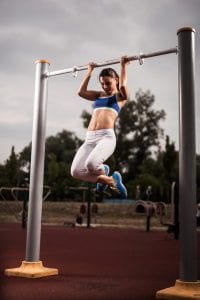
 Caregiving can be deeply meaningful, but it can also be physically and emotionally demanding. When much of your time and energy goes toward supporting someone else, your own needs can easily move to the bottom of the list.